Internet Fax
Internet fax refers to the transmission and receipt of fax documents using an internet connection instead of a traditional telephone line or physical fax machine. Also known as online faxing or cloud faxing, it converts fax data into digital formats that can be sent, received, and stored electronically.
Internet fax is widely used by organizations seeking secure, reliable document delivery without relying on legacy fax hardware or analog infrastructure.
How Internet Fax Works
Internet faxing operates through a cloud-based fax service that manages the sending and receiving of fax documents. The general process includes the following steps.
Sending a Fax
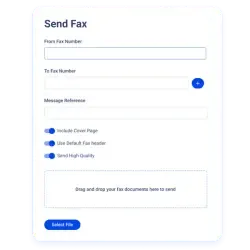
A user uploads or attaches a digital document such as a PDF, Word file, or image. The internet fax service converts this file into a fax format and delivers it to a recipient’s fax number via secure online transmission.
Receiving a Fax
When someone sends a fax to your designated fax number, it arrives as a digital file, usually a PDF or TIFF. The file then gets delivered to your chosen destination, such as your email inbox, a secure online inbox, or a portal.
Transmission Handling
The internet fax service works with carrier networks to send and deliver faxes successfully. It usually features automatic retries if a fax doesn’t go through on the first attempt and records the delivery status. All activities are logged so you can track each fax for accuracy, auditing, and compliance. Cloud services can also synchronize logs and records with enterprise fax server systems.
Key Features of Internet Fax
Internet faxing typically includes several features designed to replace traditional fax machines while enhancing security and usability.
Digital document support: Sends and receives files in common file formats, reducing the need for scanning.
Audit trails: Provides fax delivery reports and activity logs for compliance and verification.
Cloud storage: Cloud storage allows received faxes to be stored or archived digitally.
User and access controls: Supports role-based permissions, authentication, and secure inbox access.
Benefits of Internet Fax
Internet fax offers several advantages over traditional faxing while remaining fully compatible with existing fax networks. Key benefits include:
Eliminating the need for analog phone lines or physical fax machines
Supporting remote and hybrid work environments with cloud-based access
Reducing paper use, ink consumption, and hardware maintenance
Enhancing document security through encryption and controlled access
Helping organizations meet compliance requirements such as HIPAA, ISO 27001, and other data protection standards
Common Uses for Internet Fax
Internet faxing is used in industries where fax remains a trusted and required communication method. Common use cases include:
Legal: Sending contracts, agreements, and legally binding documents
Healthcare: Transmitting medical records, referrals, or prescriptions
Banking and Finance: Delivering financial statements and compliance documents
Government: Handling government forms, permits, and regulatory filings
Its continued relevance is driven by the need for secure, traceable document transmission across regulated sectors.
Related Resources
If you're looking to efax compare different internet fax platforms, this guide may help you make a more informed decision:
Internet fax provider comparison: Notifyre vs eFax
 4.7/5
4.7/5