Do SMS Appointment Reminders Reduce No-Show Rate? What the Studies Show
Updated Oct 9th, 2026 - 11 min read
 One-Time Fax
Rated 5 stars on

Google Reviews
It's 2:15 on a Tuesday. The 2:00 appointment hasn't shown up, hasn't called, and isn't answering. The chair sits empty, the stylist or clinician has nothing to do for the next 45 minutes, and there's no one on the waitlist who could have taken the slot on short notice.
That scenario plays out constantly across healthcare practices, salons, and service businesses, and it adds up to real money lost, not just an awkward gap in the schedule. SMS appointment reminders have a solid body of research behind them, and the studies are specific about how much of a difference they actually make.
This article walks through the SMS appointment reminder statistics worth knowing in 2026, what the underlying studies measured, and how businesses can put SMS reminders to work with Notifyre's online SMS service.
Before looking at how SMS helps, it's worth sizing up what businesses are dealing with. No-show rates vary by industry and setting, but the financial impact is consistent across the board.
The National Price Tag: Missed healthcare appointments cost the U.S. healthcare system an estimated $150 billion annually, with providers losing roughly $200 in revenue for each unfilled slot.
Rates Climbing Back Up: MGMA's January 2025 practice benchmarking report found single-specialty practices averaged a 6.81% no-show rate in 2023. That's climbing back toward the pre-pandemic norm of about 7% (rates had dipped to around 5% to 5.55% during 2020 to 2022), which means the cost of missed appointments isn't going away, it's heading back up. Each missed appointment means an unfilled slot and lost revenue, with the impact often higher for procedures requiring dedicated staff or operating room time.
The Trend Hasn't Reversed: An August 2026 MGMA Stat poll of 190 medical groups found 32% reported higher no-show rates so far in 2026 compared with 2025, while only 10% reported lower rates.
Dental Practices Feel It Too: Dental practices report that around 31% of appointments are missed, which reduces practice revenue and leaves staff underutilised.
Restaurants Aren't Immune Either: Restaurants lose business to unused reservations too, with approximately 20% of bookings going unused.
Risk Varies Even Within One Facility: No-show risk isn't even evenly distributed within a single facility. A 2020 case study at a radiology department in a leading MENA-region hospital found a 20% no-show rate overall, but with significantly higher rates among rural patients, new patients, and summer appointments. Pediatric patients had the highest no-show rate by specialty, while plastic surgery had the lowest.
No-shows and cancellations happen, that's simply a reality of running an appointment-based business. But the research below suggests SMS reminders might be exactly what undoes that: a simple, low-cost way to catch patients and customers before they forget, and to give them an easy way to cancel or reschedule instead of just not showing up.
If you're reading this, there's a good chance you're not just curious about the research, you're dealing with empty slots and canceled bookings yourself, and you want to know whether a fix like SMS reminders is worth it for your business specifically. Before looking at the reminder statistics, it helps to put a real number on what no-shows are costing you right now.
Use this formula:
Appointments per day × No-show rate × Average revenue per appointment × Working days per year
For example, a business running 25 appointments a day, with a 15% no-show rate and a conservative $100 average revenue per appointment, working 250 days a year, would be looking at:
25 × 0.15 × $100 × 250 = $93,750 a year in unrealised revenue.
That figure doesn't even include the wasted staff time spent preparing for appointments that never happen, or the opportunity cost of turning away someone else who could have taken that slot. Once you have your own number, the statistics below will show you what other businesses have measured after adding SMS reminders to the mix.
Several SMS appointment reminders reduce no-show rate studies come from healthcare settings, but the findings and consumer preferences apply just as well to salons, dental practices, fitness studios, and other appointment-based businesses.
No-Show Reduction in Primary Care: A 2024 primary care study reported a 42.8% reduction in missed appointments after SMS reminders were introduced, with missed appointments falling from 5,848 to 3,343 (P<.001).
Reviewing 28 Studies on SMS Reminders: A 2023 meta-analysis combined the results of 28 separate studies on SMS appointment reminders. Across the randomised trials in that group, the odds of attending were 1.62 times higher for patients who got a text reminder, roughly a 62% increase in the odds of showing up compared to patients who received no reminder at all. This isn't a one-off result from a single clinic, it's the same pattern holding up across dozens of studies.
Pediatric Clinic Results: A randomised controlled trial at a pediatric clinic found the no-show rate fell to 23.5% in the group that received text reminders, compared to 38.1% in the control group, a 14.6 point difference (P=.04).
Behavioral Health Clinic Result: A 2025 quality improvement project at an outpatient mental health clinic found text reminders sent before appointments reduced no-shows by 14.81% between the pre- and post-implementation periods (P<.001). Along with the meta-analysis above, this adds to a growing body of automated appointment reminders no-show reduction statistics studies drawn from real clinic settings rather than lab conditions.
Cochrane Review Confirms the Effect: A Cochrane systematic review pooling seven randomised trials (5,841 participants) found mobile text message reminders improved appointment attendance compared to no reminders at all (risk ratio 1.14, 95% CI 1.03–1.26), roughly a 14% relative improvement in attendance. The same review found text reminders performed about as well as phone call reminders, but at a lower cost per completed appointment.
Patients Want to Reschedule Without Calling: A 2026 survey by Tebra found 69% of patients wanted the ability to reschedule online rather than phone the office, reinforcing why a reminder that only informs (without a way to respond) leaves value on the table.
Cancellation Rates: A SpotOn infographic found that fewer than 5% of appointments are canceled when consumers receive an SMS reminder.
SMS Outperforms Other Channels: The same data set found SMS reminders had the lowest no-show rate at 19%, compared to email and phone call reminders.
Consumers Appreciate the Reminder: 64% of consumers say they appreciate getting SMS reminders for their appointments.
Consumers Want SMS Calendar Reminders: 54% of customers want SMS reminders to help them keep track of upcoming bookings, such as a car due for a check-up or a pet due for a vaccination.
GoFax Healthcare Client Results: A radiology provider using GoFax SMS reminders reduced revenue loss by up to 32% within the first 90 days. The provider also reported increased attendance across all locations, easier rescheduling, and less staff time spent following up with patients.
No-show rates aren't uniform. A business planning its own SMS reminder strategy should know how its industry compares before setting expectations.
Note the healthcare figure above reflects MGMA's aggregate benchmark across primary care and single-specialty practices. Individual specialties, safety-net clinics, and behavioral health settings often report considerably higher rates, which is part of why measuring your own practice's baseline matters more than any single industry average.
Because rates vary this much by setting, a business is better off measuring its own no-show rate before and after adding SMS reminders rather than relying on an industry average alone.
| Industry | Typical No-Show Rate | Source |
|---|---|---|
| Healthcare (single-specialty aggregate, 2023) | ~6.81% | MGMA, January 2025 |
| Dental practices | ~31% | Notifyre SMS Marketing Statistics |
| Restaurants | ~20% | Notifyre SMS Marketing Statistics |
| Salons | 1 to 2 no-shows per week reported by 30% of salons | Notifyre SMS Marketing Statistics |
| Fitness Studios | 10% to 30% | Notifyre SMS Marketing Statistics |
Businesses generally choose between three reminder channels: phone calls, email, and SMS. Each has different strengths and trade-offs.
SMS has an advantage here because of how quickly people read it. SMS open rates run as high as 98%, which is one reason it consistently outperforms email and phone reminders in no-show studies.
| Method | How It Works | Limitations |
|---|---|---|
| Phone call | Staff or an automated system calls the customer ahead of the appointment | Time-intensive for staff, easy to miss, no easy way to confirm or reschedule in the moment |
| A reminder is sent to the customer's inbox, usually with appointment details and a link | Reminders arrive alongside other unread mail, and average email open rates sit around 37%, lower visibility than text, especially close to appointment time | |
| SMS | A short text message is sent to the customer's phone, often with the option to reply | Requires an accurate mobile number and, in the U.S., 10DLC registration for business SMS |
Some businesses try to solve the no-show problem by penalising customers directly, but the evidence doesn't back that up as an effective fix on its own. A 2023 policy analysis examining proposed no-show co-payment legislation found:
Evidence on financial penalties alone is mixed
The approach would likely have a minimal impact on attendance on its own
Reminders address the more common root cause (forgetting or losing track of the appointment), while fees only address the cost of already missing it
A fee doesn't fix forgetfulness, and it can leave a bad taste that costs a business the relationship entirely. A reminder, by contrast, helps the customer show up in the first place.
Not every SMS reminder performs the same way. Two factors show up repeatedly in the research: timing and interactivity.
Timing
A 2024 discrete choice experiment of 361 consumers found:
A significant preference for reminders delivered less than three days before an appointment
Sending a reminder too early gives customers time to forget again
Sending it too close to the appointment leaves little room to fill a canceled slot
This is where Notifyre's SMS scheduler comes in handy: a business can queue reminders in advance and have them go out automatically at that three-day mark, without staff needing to track and send them manually.
Interactivity
The same study found:
Consumers significantly preferred reminders that let them cancel or modify the appointment directly, rather than one-way reminders
Modeling the combined preferences (automated SMS, delivered under three days out, with basic appointment details, and the ability to cancel or modify) put the likelihood of choosing that reminder setup at 97%
Giving a recipient an easy way to cancel also has an operational upside: an early cancellation gives staff time to offer the slot to someone else, while a no-show gives them no notice at all
This is where two-way SMS becomes useful. Instead of sending a reminder that only informs, a business can let the recipient reply "C" to cancel or "R" to reschedule, and route that reply into a shared inbox staff can act on.
The research points to a consistent set of features that make SMS reminders effective: automation, timing control, and the ability for recipients to respond. Notifyre's online SMS platform is built around those same three areas.
SMS scheduling lets a business queue reminders in advance so they go out at a consistent time before each appointment, rather than relying on staff to send them manually.
Two-way SMS allows recipients to reply directly to a reminder to confirm, cancel, or ask a question, with replies landing in a shared inbox.
SMS templates let a business standardise its reminder wording while still personalising details like the customer's name, appointment time, and location.
SMS API access lets a practice management or booking system trigger reminders automatically when an appointment is created, changed, or canceled.
No-shows hit dental practices hard. The American Dental Association's Health Policy Institute has repeatedly found in its monthly surveys that roughly 81-83% of dentists name patient no-shows and last-minute cancellations as the single biggest barrier to a full schedule.
Dental patient no-show reduction statistics for email reminders also tend to lag behind SMS, largely because of the open rate gap: SMS open rates run as high as 98% compared with around 37% for email, so a text is far more likely to actually be seen in the day or two before an appointment.
Here's how a practice might use Notifyre to address that:
A patient books a cleaning through the practice's scheduling software.
The booking triggers an SMS through Notifyre's SMS API, sent 3 days before the appointment (in line with what the research shows patients prefer).
The message uses a saved template:
"Hi [Name], this is a reminder for your dental appointment at [Practice Name] on [Date] at [Time]. Reply C to cancel or R to reschedule."
If the patient replies "C," the reply lands in Notifyre's two-way SMS inbox, and front-desk staff can immediately offer the slot to someone on a waitlist.
Delivery and reply activity are tracked in Notifyre's activity dashboard, giving the practice a record of which reminders were sent, delivered, and answered.
This kind of workflow doesn't guarantee a specific reduction in no-shows since results depend on the practice, patient population, and existing scheduling process. But it reflects the same conditions (automated, timely, and interactive) that the studies above associate with fewer missed appointments.
Across primary care, pediatrics, behavioral health, and dentistry, the same pattern holds: reminders that are automated, well-timed, and easy to reply to lead to fewer missed appointments.
Notifyre covers all three: SMS scheduling to control timing, two-way SMS so recipients can confirm or cancel by reply, and an SMS API to connect reminders to your booking system.
Sending is pay-as-you-go, so you only pay for the messages you send. Take a look at Notifyre's SMS pricing to work out what your reminder volume would cost. Once your business is verified, the team will walk you through 10DLC registration and what's required to start sending.
Try Notifyre's SMS reminders and let automation, timing, and two-way replies do the work.


Get unbeatable value with Notifyre’s pay-as-you-go SMS. Send smarter, save more!
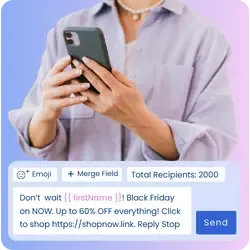 Online SMS Service
 Use scheduling tools, SMS templates and bulk contact upload to send SMS broadcasts.
 Explore SMS Marketing

Our SMS and fax gateway is compliant with privacy laws, ensuring your business data stays secure. Notifyre’s secure messaging tools keeps your online fax secure and SMS data protected at all times.
 4.7/5
4.7/5